
"Central America beans"
4000 article(s) found

Nicaraguan Coffee Flavor Manor in Central America introduction to boutique coffee beans
Why do instant coffee easily lead to infertility? According to the editor of the China Food and Beverage Network, both instant coffee and milk tea contain large amounts of milk trans fatty acids. According to relevant experts, these trans fatty acids reduce male hormone secretion and inhibit sperm motility; they also affect egg quality and increase the risk of infertility and fetal malformations. Trans fatty acids affect

Characteristics of coffee beans in various producing areas in Panama which producing area of Panamanian butterfly coffee
For the exchange of professional baristas, please follow the Coffee Workshop (official Wechat account cafe_style). There are seven countries in Central America, namely, Belize, Costa Rica, El Salvador, Guatemala, Honduras, Nicaragua and Panama. All seven countries in Central America produce coffee, among which Guatemala, Costa Rica and Honduras are global coffee exporters.

Coffee bean producing area-Central America-Panama (Panama)
Famous representative coffee: Panama Panama is bordered by Costa Rica to the west and Colombia to the east of South America. Most of its coffee is grown in the mountains near Costa Rica to the west. Panamanian coffee has a medium and uniform flavor and texture, with a blue mountain temperament, so it is said that Panamanian coffee is often used to imitate the high-priced Hawaiian Kona or the Jamaican Blue Mountains. But Ba

Coffee bean producing areas-Central America-Panama
Famous representative coffee: Panama Panama is bordered by Costa Rica to the west and Colombia to the east of South America. Most of its coffee is grown in the mountains near Costa Rica to the west. Panamanian coffee has a medium and uniform flavor and texture, with a blue mountain temperament, so it is said that Panamanian coffee is often used to imitate the high-priced Hawaiian Kona or the Jamaican Blue Mountains. But Ba
The protagonist of the coffee myth in Latin America, Central America and the Caribbean
When it comes to Jamaica, we immediately think of "Blue Mountain" coffee. Rare and expensive true blue mountain beans, originally from the Wallensford Coffee Garden, have now been expanded to the Blue Mountains with an altitude of more than 1000 meters. As long as the tree species and treatment procedures of the manor meet certain standards, the government will issue a guarantee to allow the use of the name "Blue Mountain".

The protagonist of the coffee myth in Latin America, Central America and the Caribbean
When it comes to Jamaica, we immediately think of "Blue Mountain" coffee. Rare and expensive true blue mountain beans, originally from the Wallensford Coffee Garden, have now been expanded to the Blue Mountains with an altitude of more than 1000 meters. As long as the tree species and treatment procedures of the manor meet certain standards, the government will issue a guarantee to allow the use of the name "Blue Mountain".

South African coffee beans are fragrant and have less acidity, like coffee bean cafes in Central America.
Boutique coffee has a strict grading system. Generally, raw beans are preserved in parchment coffee beans in the form of endocarp after processing, and the endocarp is removed before export. Go through a strict grading process to ensure the uniformity of quality. And it is very important to preserve the protection in the process of transportation, such as the control of temperature and humidity, the control of ventilation, avoiding odor adsorption and so on.

Salvadoran coffee is the Salvadoran coffee bean of that continent, which inherits the mild quality of Central America.
Professional coffee knowledge exchange more coffee bean information please follow the coffee workshop (Wechat official account cafe_style) front street-Salvadoran coffee introduction El Salvador, the full name of the Republic of El Salvador, El Salvador in Spanish means savior, named after Columbus's experience in discovering the American continent. It is a coastal country located in the north of Central America.

Nestle capsule coffee machine official website, what is coffee capsule?
Nestle capsule coffee machine official website, what is coffee capsule? Many people may hear the word coffee capsule for the first time and feel confused and feel like medicine. In fact, the word is translated from the English capsule, because its own small aluminum platinum space contains coffee powder, so the name. Because the wall of the capsule is hard and can maintain the prototype at high temperature, so

Panamanian Baru Volcano, one of the highest volcanoes in Central America
Panama has one of the highest volcanoes in Central America: Mount Baru. The Baru volcano has an altitude of more than 3474 meters, and the surrounding land is rich and balanced in nutrients, providing sufficient conditions for the planting and cultivation of Panamanian coffee. Cold air currents converge and flow above 2262 meters in the Central Mountains, resulting in multiple in the Bouquete and Volcan regions.
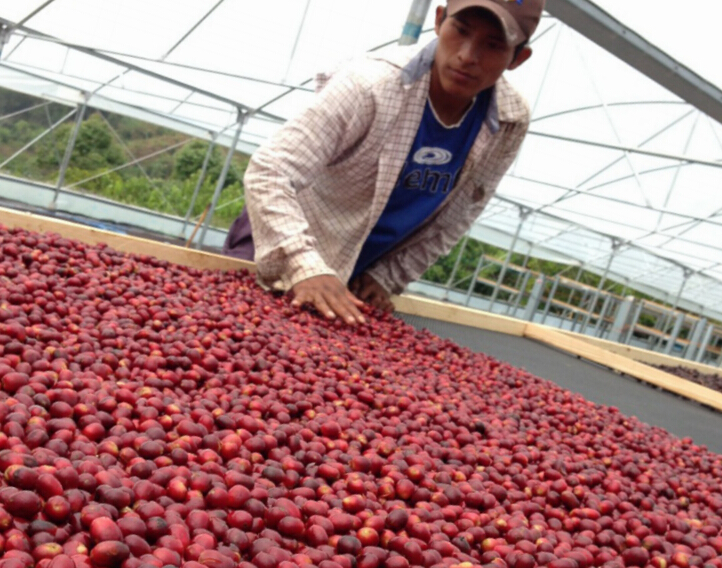
Hand net baked El Salvador Red bourbon El Salvador map and Guatemala Honduras adjacent Central America
Many coffee lovers will not know the country of El Salvador, which is located in Central America, bordered by Guatemala and Honduras in the north, and the Pacific coastline in the west and south. El Salvador is the smallest country in Central America and the most densely populated country in Central America. The topography is mainly mountainous and plateau, with many volcanoes. Santa Ana active volcano is 2385 meters above sea level.

What is the standard of coffee grading in Central and South America? does altitude determine the level of coffee?
It is understood that the more common classification of coffee beans is generally based on the size of coffee beans, according to the size of the sieve, and also according to the defect rate. of course, the difference in this classification also goes deep into every country and region, and they cannot be done step by step. after all, there is a big difference. Most of the Central and South American countries are in Central and South America, and most countries are classified as one.

Introduction of Nicaraguan Coffee Manor Los Congo Manor in Central Central America
Nicaraguan coffee is grown in fertile volcanic soil, and SHG is the best harvested from 1500 to 2000 meters above sea level. The local climate belongs to alpine terrain, which is surrounded by thick fog throughout the year and covers the whole mountain forest, resulting in a low-temperature and humid climate. Years of mating evolution of tree species, coupled with insisting on the ancient and time-consuming treatment process, retain natural acidity and strong aroma, and shade is used.

Nicaragua Coffee, Central America's Poorest Coffee Producer
Nicaragua is now one of the poorest countries in Central America. Because of its poor economic base, the coffee industry is still in a relatively backward state, while coffee farmers are in an extremely poor state. Fortunately, Nicaragua's coffee has received some foreign aid funds to improve the quality of its coffee. Nicaragua's Madagerba, Chinodega, Segovia region of coffee
The most famous Coffee beans in the World Coffee beans from Central and South America and their producing areas
Do you know where the most famous coffee beans in the world are? for you, the best coffee is found by yourself. Avoid using specific brands, which will hide the source of the coffee from you. Here is a list of some coffee in the world for your reference. The following is an introduction to the origin of individual coffee beans in Central and South America. Brazil:
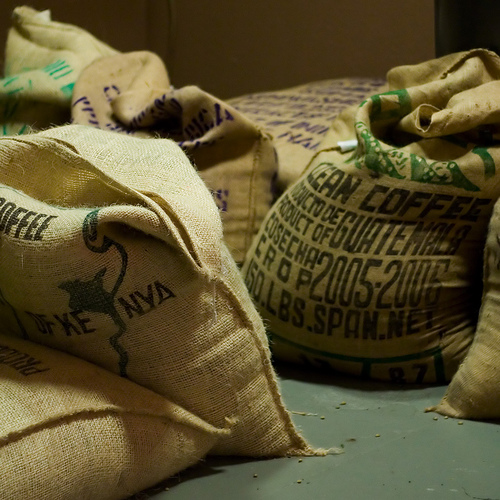
Honduras Coffee beans produced by hand Central America Honduras (Honduras)
Honduras: special Highland Coffee Honduras is located in the north of Central America, the Caribbean Sea to the north, the Gulf of Fonseca in the Pacific Ocean to the south, Nicaragua and El Salvador to the east and south, and Guatemala to the west, mostly mountains and plateaus. It has a tropical climate, mild temperature and abundant rainfall, so it is an ideal place for coffee growth. Flavor and taste characteristics: good flavor, rich and mellow

Honduras Coffee Bean Central American Rainforest countries
Honduras Honduras Central American rainforest countries, mixed with the mysterious flavor of ancient Maya and the enthusiasm and unrestrained enthusiasm of Central America, it is suitable for making single, medium or deep baking. Coffee beans with a slightly charming fragrance of flowers and fruits, very delicate and elegant, taste mild and full, slightly sour, aftertaste back sweet, belong to the gentle style of coffee. The appearance particle is small, the color is round and light.

Coffee flavor of Tianqi Manor in Matagalpa, Nicaragua, central Central America.
When tasting Nicaraguan coffee, it is best to drink cold water first, so that you can better feel its mellow taste. Drink coffee while it is hot, because the tannins in Nicaraguan coffee are easy to change during cooling, and the taste becomes sour, which will affect the flavor of the coffee. You can add the right amount of sugar, and then add cream. Enjoy a cup of high quality Niga

In 2017, Honduras officially became the largest coffee producer in Central America.
Professional baristas follow the Coffee Workshop (official Wechat account cafe_style) Coffee International (OIC) said that it is estimated that Honduras is already the largest coffee producer in Central America, with Honduran coffee production reaching 7.2 million piculs in the 2016-2017 harvest year, an increase of 6.6 percent over the previous harvest year. The OIC report shows that the current harvest year, which begins on October 1st,

Coffee producing area | Belize coffee producing area introduces the flavor characteristics of Belize coffee in Central America.
Belize is a Central American country located between Mexico in the north, Guatemala in the west and south, and the beautiful Caribbean Sea in the east. Belize coffee is grown organically under the canopy of the rainforest at Gulong Water Pot Manor in the western plateau of Belize. The estate covers an area of 130000 acres and includes cattle, corn, orchards, wildlife and tourist attractions. Fertilizer